14.5M
Zero-dose children worldwide who have never received a single vaccine
In April 2025, Gavi, the Vaccine Alliance and the Global Health Advocacy Incubator (GHAI) convened 21 parliamentarians from 10 countries to a strategic forum in Türkiye's capital where they signed the Istanbul Call to Action for Immunization Financing. Here is what happened next.
Vaccines save lives. It is the simplest equation in public health. Yet across Africa and Asia, the systems that deliver vaccines to children are under threat.
Global donor funding for immunization is declining. Countries that once received full support must shoulder more of the cost themselves. As nations transition from Gavi assistance, the share of vaccine costs covered by domestic budgets must grow. The question is stark: who pays when the donors scale back?
But a country is not an abstraction. It is legislators who interrogate national budgets. Health committee chairs who can question ministers. Elected officials who can turn political will into budget lines. This is the story of how 21 of them decided to act.
Twenty-one Members of Parliament from 10 countries gathered in Istanbul for a historic forum organized by Gavi and GHAI.
Call on governments to rapidly adopt policies to mobilize domestic resources for immunization and primary health care
Urge governments to maintain and expand Gavi co-financing obligations and establish long-term sustainable financing mechanisms, including support for regional vaccine manufacturing
Call on international partners and donors to continue investing in immunization and support countries transitioning to domestic vaccine financing
Appeal to Gavi and partners to continue supporting civil society organizations and engage parliamentarians
Constitute an Africa-Asia Parliamentary Network to lead advocacy for increased domestic budget allocations for immunization
From the forum floor to the parliament floor. Here is what happened in each country.
☟ Click on each country tab below to see results
Nigeria delivered the most dramatic legislative action of any country in the network. Senator Ipalibo Harry Banigo, the caucus chair, championed a bill to double the Basic Health Care Provision Fund. It passed two Senate readings. The caucus organized a capacity strengthening summit that brought together health committee chairs from all 36 state assemblies.
The Vaccine Network for Disease Control (VNDC), GHAI's civil society partner in Nigeria, coordinated media advocacy that generated national coverage and supported the caucus throughout.
"Legislators are not just lawmakers. They are health champions whose decisions determine whether a child lives or dies."
Hon. Amos Magaji, Member, National Assembly, Nigeria"We must also look within and strengthen our domestic resource mobilization, ensuring transparency and accountability so that every naira spent achieves its intended purpose."
Senator Ipalibo Harry Banigo, Chair, Parliamentary Immunization Caucus, Nigeria
Nigeria's Parliamentary Immunization Caucus
Madagascar's Parliamentary Vaccination Coalition is chaired by Hon. Rajaobelina Lova, president of the Health and Family Planning Committee. Even during a period of political transition, CSO and parliamentary champions ensured vaccines remained a priority. The coalition played a key role in enabling Gavi co-financing payments to continue uninterrupted.
When the Malagasy parliamentarians returned from Istanbul, their advocacy generated significant media coverage that raised the profile of immunization financing nationally. HINA, GHAI's civil society partner, supported caucus coordination and worked with journalists to sustain that momentum. The caucus used WhatsApp to organize MPs. A network of 131 women mayors became vocal advocates for immunization at the local level.
"59% of Madagascar's health financing comes from grants and loans. We must change this. Our children's health cannot depend on the generosity of others."
Hon. Fenohery, Member of Parliament, Madagascar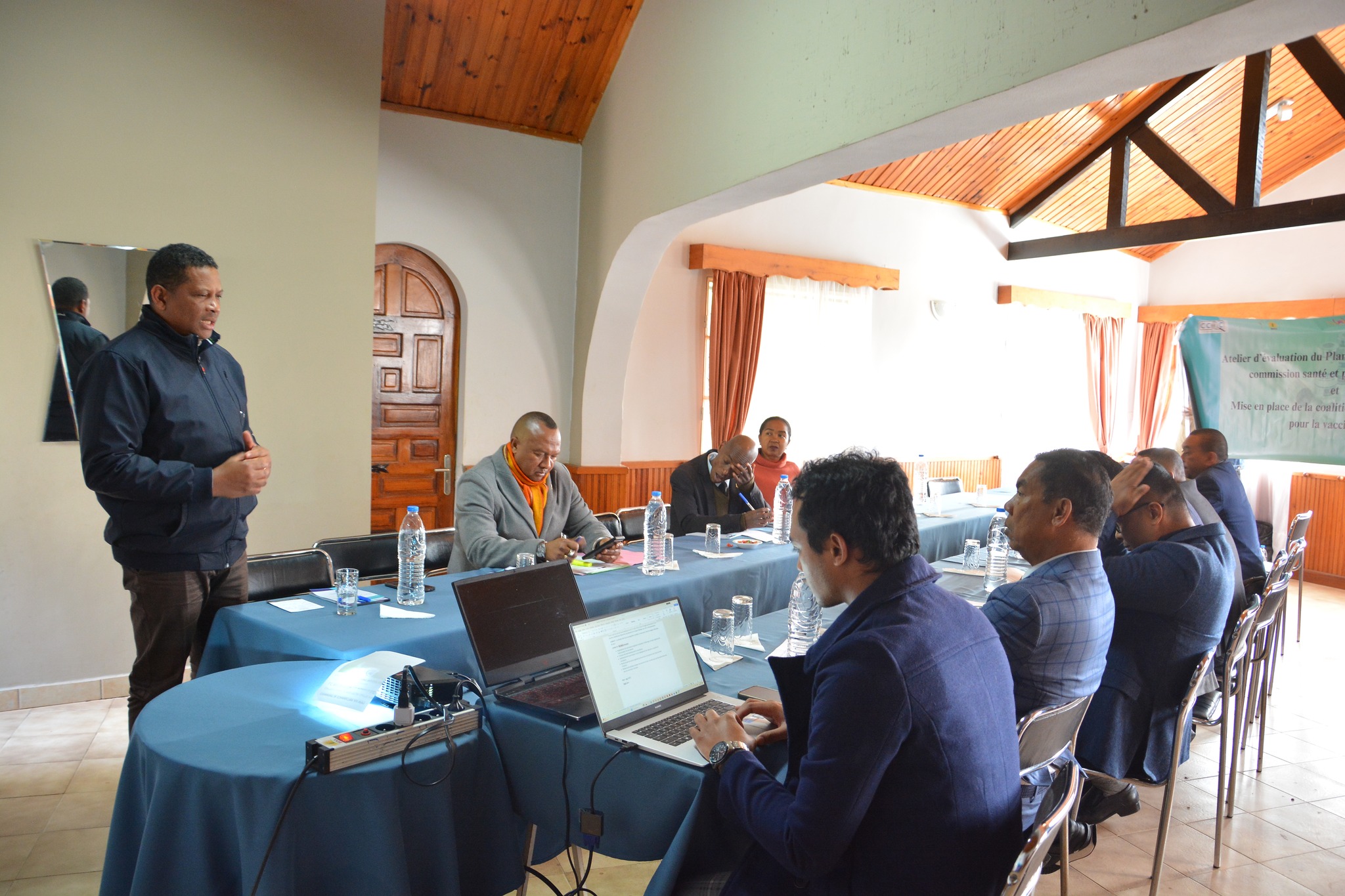
Madagascar's Parliamentary Vaccination Coalition
Zambia was one of the first countries to launch its parliamentary immunization caucus after Istanbul. The caucus drove increases in both the national health budget and immunization-specific allocations. The Churches Health Association of Zambia (CHAZ), GHAI's civil society partner, supported the caucus formation and parliamentary engagement.
Hon. Christopher Kang'ombe championed an innovative approach: using Constituency Development Funds (CDF) for local immunization support. This model channels parliamentary constituency funds directly into health delivery and has drawn attention as a replicable financing mechanism across the network.
"This caucus broke party politics. We came together across party lines because children don't belong to political parties. Their health is everyone's responsibility."
Hon. Christopher Kang'ombe, Member of Parliament, Zambia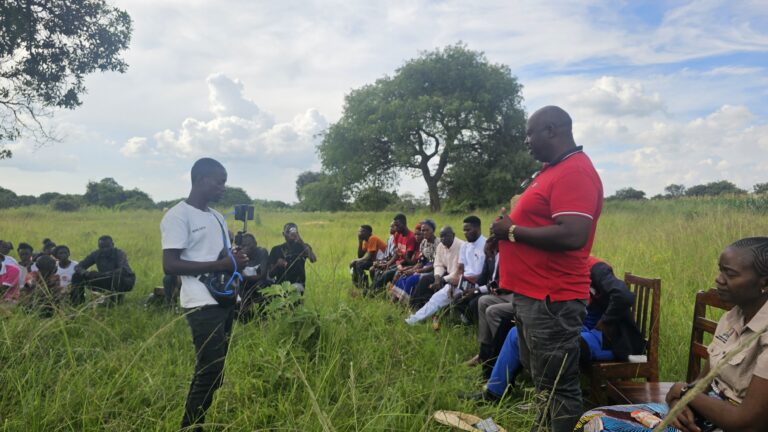
Immunization parliamentary champion Hon Joseph Musanje with constituents over use of funds
Sierra Leone's parliamentary immunization caucus is led by Hon. Bernadette Wuyatta Songa Lahai and Hon. Tamba Johnny. The caucus successfully advocated for immunization financing to be included in the national budget. The approved immunization budget increased significantly from 2025 to 2026.
Health Alert, GHAI's civil society partner in Sierra Leone, facilitated the caucus formation and generated media coverage in national newspapers including The Nationalist. The caucus immediately began holding the Ministry of Health accountable for immunization delivery targets.

Sierra Leone's Parliamentary Immunization Caucus
Ghana launched its parliamentary immunization caucus with a distinctive feature: it is explicitly bipartisan. MPs from the ruling party and opposition joined together, signaling that immunization financing transcends political competition. Hope for Future Generations (HFFG), GHAI's civil society partner in Ghana, supported the caucus formation.
The caucus collaborates directly with WHO and UNICEF country offices and is committed to advocating for immunization to be a "flagship priority" for the government.
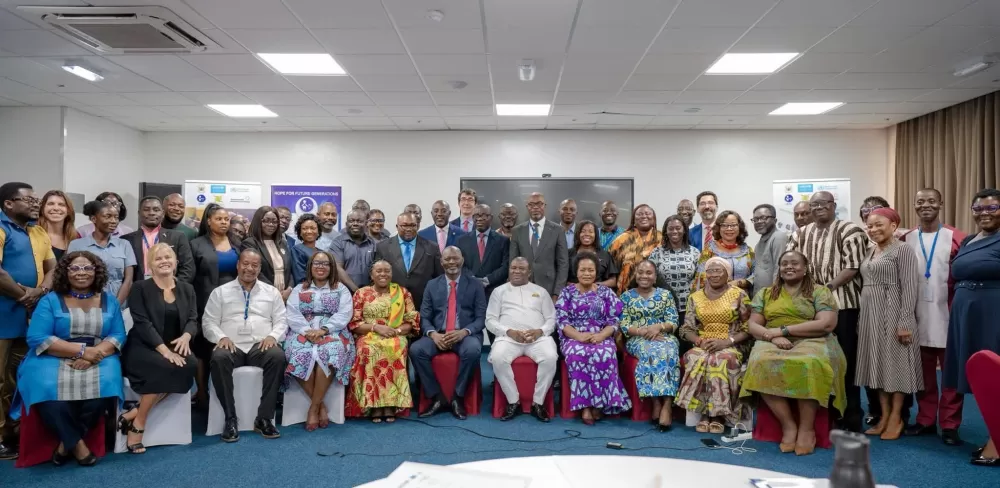
Ghana's bipartisan Parliamentary Immunization Caucus
Kenya's caucus was led by Hon. Kimani Kuria, chair of the Health Committee, and Hon. Irene Mayaka. The formal caucus launch ceremony is set for April 29, 2026. HENNET, GHAI's civil society partner in Kenya, supported parliamentary engagement and advocacy efforts.
Hon. Dr. James Nyikal, a medical doctor and MP, brought a deeply personal advocacy style. In parliament, he told the story of his household worker who left Kenya to seek vaccines in Uganda because they were unavailable locally. The story galvanized colleagues and made national news.
"My household worker left this country and went to Uganda to get her child vaccinated. That is the reality we are living with. We need our voices to be heard in the right place."
Hon. Dr. James Nyikal, Member of Parliament, Kenya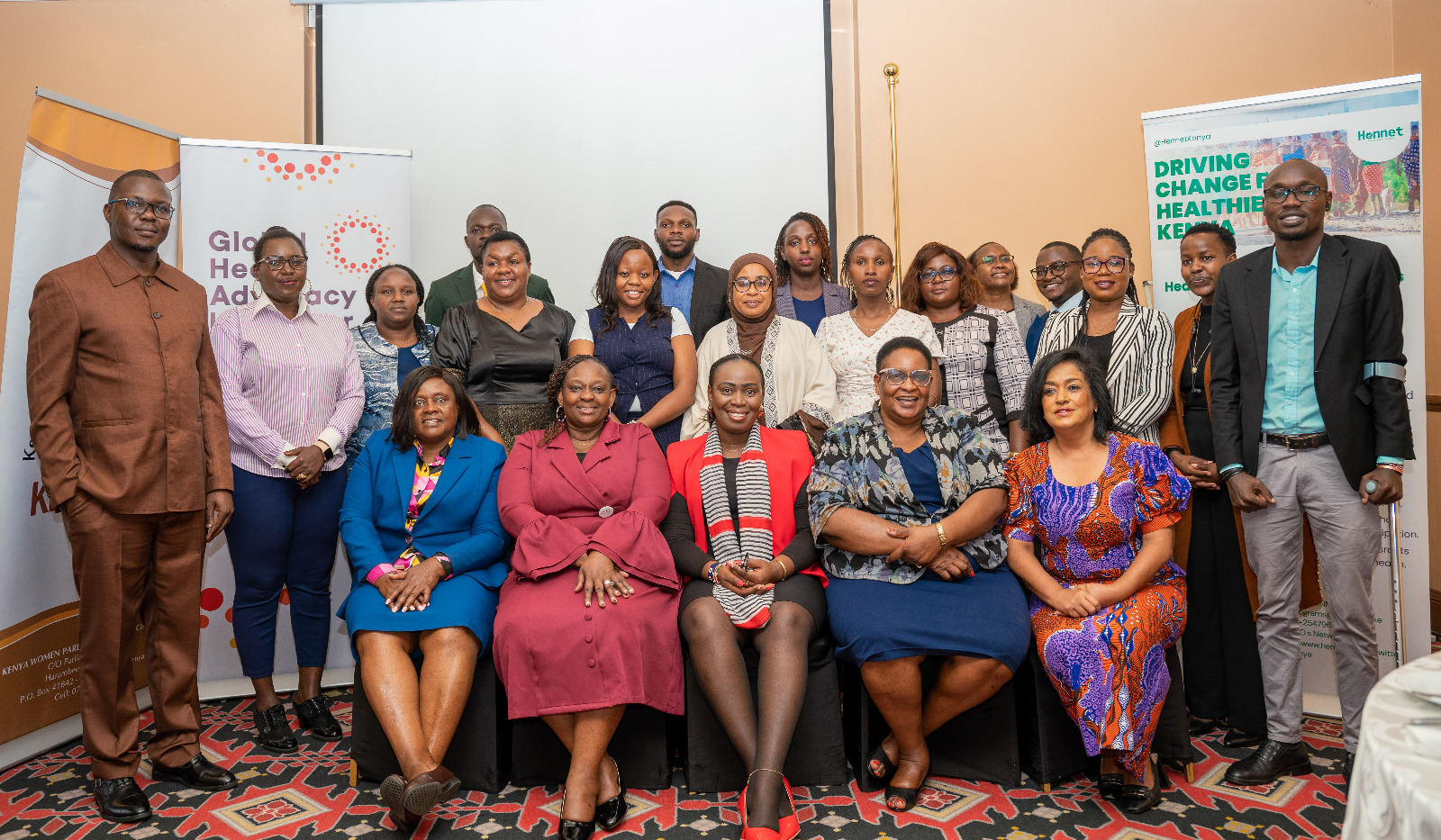
Kenya Parliamentary Immunization Caucus formation ceremony, March 2026
Fifteen deputy champions form the parliamentary network, which is the first dedicated vaccination caucus in Côte d'Ivoire's parliamentary history. The government has significantly increased its domestic share of vaccination costs. ASAPSU, GHAI's civil society partner in Côte d'Ivoire, supported the parliamentary network formation.
"By June, the network should be official so that the voice of 15 MPs can be heard with the important point: increasing the budget allocated to vaccination."
Hon. Berni Naman, Member of Parliament, Côte d'Ivoire
Côte d'Ivoire's Parliamentary Vaccination Network
Cameroon's parliamentary caucus was formed under the leadership of Hon. Ngo Issi, who returned from Istanbul and immediately began organizing. The Prime Minister issued a directive reinforcing the government's commitment to immunization financing.
SAILD, GHAI's civil society partner in Cameroon, supported legislative engagement that generated coverage on CRTV, Cameroon's national broadcaster.

Cameroon's Parliamentary Forum on Immunization Financing
Laos is the only Asian country in the network. Two landmark parliamentary workshops in Thalath and Vang Vieng transformed general support into precise fiscal commitments. Parliamentary advocacy secured a government commitment to nearly double the immunization budget by 2027.
Parliamentarians are now pushing to codify immunization as a "first-line charge" in the national budget, which would make it non-discretionary spending. Hon. Bounta Thepphavong, chair of the Committee on Social and Cultural Affairs, leads the parliamentary effort. Health Poverty Action (HPA), GHAI's civil society partner in Laos, embedded CSO voices in immunization financing processes. The caucus formalization process is navigating a February 2026 parliament transition.
"Our role as parliamentarians is to ensure that the national budget reflects the real needs of the people. Vaccination is one of the most cost-effective investments we can make in human capital and national prosperity."
Hon. Bounta Thepphavong, Chair, Committee on Social and Cultural Affairs, Lao National AssemblyLiberia delivered one of the most dramatic budget increases in the network. The immunization budget and the broader health budget both increased significantly following the Istanbul commitments.
Due to the advocacy work of MP champions after Istanbul, the Liberian government strengthened its commitment to immunization financing, clearing pending obligations and making advance commitments. Public Health Initiative Liberia (PHIL), GHAI's civil society partner, supported parliamentary advocacy and engagement.
The caucus launch is in formation. While formal structures are still developing, the results demonstrate that the Istanbul commitments translated immediately into action.
One year of parliamentary advocacy produced measurable results across every country in the network.
Parliamentarians from 10 countries driving immunization financing across two continents.
“Since we got back from Istanbul, it’s not business as usual. We are pushing for a dedicated immunization budget line at the federal and state levels.”

“We must strengthen our domestic resource mobilization for immunization. We cannot continue to depend on external support forever.”

“My household worker left this country and went to Uganda to get her child vaccinated. That is the reality we are living with. It’s humanly possible to fix this.”

“This caucus broke party politics. We came together across party lines because children don’t belong to political parties. Their health is everyone’s responsibility.”

“This parliamentary network on immunization is the first of its kind in Côte d’Ivoire. We are writing history.”

“59% of Madagascar’s health financing comes from grants and loans. That is not sustainable. Parliament must act to increase domestic investment in health.”

“Immunization must be a flagship priority for this parliament. We owe it to every Ghanaian child to ensure no one is left behind because of where they were born.”

“Our role as parliamentarians is to ensure that the national budget reflects the real needs of the people. Vaccination is one of the most cost-effective investments we can make.”

“You know how many Cameroonians are dying of malaria or polio or other preventable diseases? Parliamentarians must lead on this.”

“We don’t just want to form the caucus and have it lying about. We want to be active. We want to push legislation. We want results.”

“Underinvestment weakens service delivery. If we don’t fund immunization properly, we are failing our children and our future.”

The Istanbul Call to Action set something in motion that no single event could contain. Eight caucuses in one year. 187 MPs engaged across two continents. Ten civil society partners driving advocacy on the ground. A movement that grew from 21 signatories to a network spanning Africa and Asia.
The work ahead is clear. Countries must continue increasing their domestic share of vaccine financing as they transition from donor support. Two more countries need caucuses launched. The Africa-Asia Parliamentary Network needs to convene and strengthen its collective voice. Every budget gain made this year must be defended in the next cycle.
What Istanbul proved is that when parliamentarians commit, budgets move. When civil society organizations equip them with evidence, politics yields to public health. The movement is no longer a promise. It is a record.